Injection-Molded ETFE Components
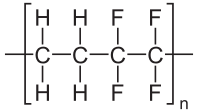
ETFE (Ethylene Tetrafluoroethylene) is a high-performance partially fluorinated polymer designed for applications that demand an optimal balance of mechanical strength, low weight, and excellent chemical resistance. As a derivative of PTFE, ETFE combines many of PTFE’s outstanding mechanical and chemical properties with the processing advantages of polyethylene (PE). Thanks to its relatively straightforward processability in injection molding, ETFE enables the cost-effective production of highly precise components with complex geometries, making it an ideal material for demanding engineering and industrial applications.
Among all fluoropolymers, ETFE offers the highest mechanical strength. Compared to fully fluorinated materials such as PFA, however, it exhibits slightly lower chemical and temperature resistance. ETFE also has a significantly lower density of approximately 1,700 kg/m³.
Thanks to its low weight, high light and UV transmittance, excellent weather resistance, and non-stick properties, ETFE film is widely used in architectural applications and as a protective material in photovoltaic systems.
Injection-molded ETFE components are primarily used in the electrical and energy industries, aerospace, and the automotive sector. Typical applications include insulating components, cable and connector systems, housing components, and other structural parts that must withstand continuous mechanical stress and demanding operating conditions over the long term.